Classroom Walls
After I graduated from college with a degree in Secondary Education, I was hired to be the English teacher at Greenway Middle School. It was a new school, surrounded by tract housing in a suburb outside of Phoenix, Arizona. Most of my students came from working-class families, had parents who worked on farms or at Turf Paradise, the horse racing track nearby. It was an affordable area, and often families moved there because of recent disruptions in their lives, marital or financial. Many of my students were just finding their balance.
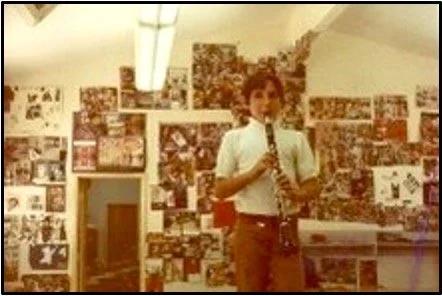
It was the 1970’s, a golden age of music, and lyrics to popular music had become mainstream. I decided to teach poetry through popular songs. Soon I heard my students exclaim in amazement, “The Beatles are poets!” Once they appreciated the rhythm and rhyme of modern music, the depth of classical poetry came more easily to them. We began a project to demonstrate their understanding. We collected old magazines and I gave them blank poster boards. They cut images from the magazines to create collage art that represented what they had read and learned and then spoke to their classmates to share this. The finished posters were mounted on the walls and soon our classroom became a student art gallery.
Today, almost a half century later, Texas governor Greg Abbott wants the Ten Commandments posted on classroom walls. Not student art, the Ten Commandments. Over the years I have worked in many roles in public education, and as soon as I saw an image of Abbott’s wall display, I thought of the schools I have served with students who are Catholic, Muslim, Buddhist and Jewish, or have no church alliance. I thought of the separation between church and state derived from the first Amendment to our Constitution that welcomes and accepts all these students, regardless of religion, and requires that public funds not be spent to promote religion in our schools. We are there to teach, not preach. And our students are there to grow and learn, not conform.
Mr. Woodward, my principal at Greenway Middle School, was not like Governor Abbott. When he came to visit my classroom one day, he saw a glorious mix of students gathered in groups around tables. One shy boy worked on his lessons atop the broom closet. Another played the melody of a poem on his clarinet. And all the walls were covered with art that demonstrated the uniqueness, individuality and creativity of these students—and what they had learned.
My principal looked around, raised his arms and declared, “Now this is what education is supposed to look like!”