Not The People's Choice
I wasn’t raised in a political family. I knew my father voted Republican, and my mother couldn’t care less. Aunts and uncles were Democrats, so I overheard some energetic discussions while visiting them, but not much at home. When I grew old enough to vote I registered Republican. To me it was like being Episcopal, it was handed down. Over time I’ve paid more attention, changed parties, and now wish we didn’t have political parties at all. But I’ve always held the belief it was up to the people to choose their leaders, and up to the leaders to represent the will and the needs of the people, especially those who do not have a voice like the poor, the sick, the elderly, and the disenfranchised.
I thought this was a shared American value, until one day in Hawaii in the mid-1990’s. I was parked on a grassy hillside in Maui’s Upcountry, about to visit the Lavender Farm. Just as I reached to turn off the engine, a report on the radio caught my attention. They were talking about an organization called ALEC. This stood for American Legislative Exchange Council and had been in operation as a not-for-profit since the 1970’s. I stayed in the car to listen and instead of the scent of lavender that day, I received the stench of corruption.
ALEC is a group of business leaders, elected representatives and lobbyists with the shared mission to collaborate on writing legislation that benefits conservatives, particularly wealthy business owners. While they claim to be non-partisan, the stated ALEC objectives are to support limited government, low taxes, free markets and federalism—the classically conservative Jeffersonian principles. The most startling element was learning the group convened to write bills which their legislative affiliates would then lobby to pass in congress at both the state and federal level. They also worked aggressively to block bills that did not meet their goals. These are not elected officials the writing bills, these are private citizens writing bills for the legislators.
Elected officials who collaborate with ALEC often receive donations from its business members. While the organization claims to be bipartisan, almost all leadership positions are held by Republicans and the policies promoted are uniformly conservative. For example, ALEC lobbies for reduced gun regulations, weakened labor unions, fewer environmental regulations and tighter voter ID rules. They support school vouchers and oppose tobacco taxes. While this may seem to be normal lobbying for conservative policies, the focus is primarily on business interests and profit. For example, also on the list is a stricter criminal justice system combined with the privatization of prisons—more prisoners, more profit.
While dues are noted at $7,000-25,000, large corporate donors give much more and also pay for ‘scholarships’ for legislators to attend conferences where corporate representatives, legislators and lobbyists convene to develop model bills. For example, a bill giving corporations the right to withhold the identity of certain fluid contents in fracking, sponsored by ExxonMobil. Corporate members also have the voting power to kill any model bills they do not like. The efforts are not limited to the bills written in ALEC convenings, there are lists of bills to approve or oppose sent by ALEC to legislators in all 50 states, along with talking points to take on the road, or use in interviews, town hall meetings or op-ed content. A brochure posted in 2025 boasted that ALEC had promoted more than 1,000 bills.
What I began to understand as I listened to this reporting was that through ALEC wealthy business owners could significantly control members of congress to adopt policies that benefitted them with no focus on policies to benefit ordinary citizens. Since then, I have not learned of a similar organized effort on the Democratic side. While there are organizations that support democratic and progressive policies, like SiX, the State Innovative Exchange, they do not write legislation, nor are they designed specifically to merge elected representatives, corporations and lobbyists to directly influence government policy at both state and national levels.
There is hope. There is currently an effort to remove ALEC’s tax exempt status. These complaints assert the organization is an aggressive powerhouse for legislation that is profit driven and anti-public interest. In short, ALEC is an organization with a powerful lobbying team largely funded by large corporations and fueled by legislators who act in the interests of the corporations who support them, tax free.
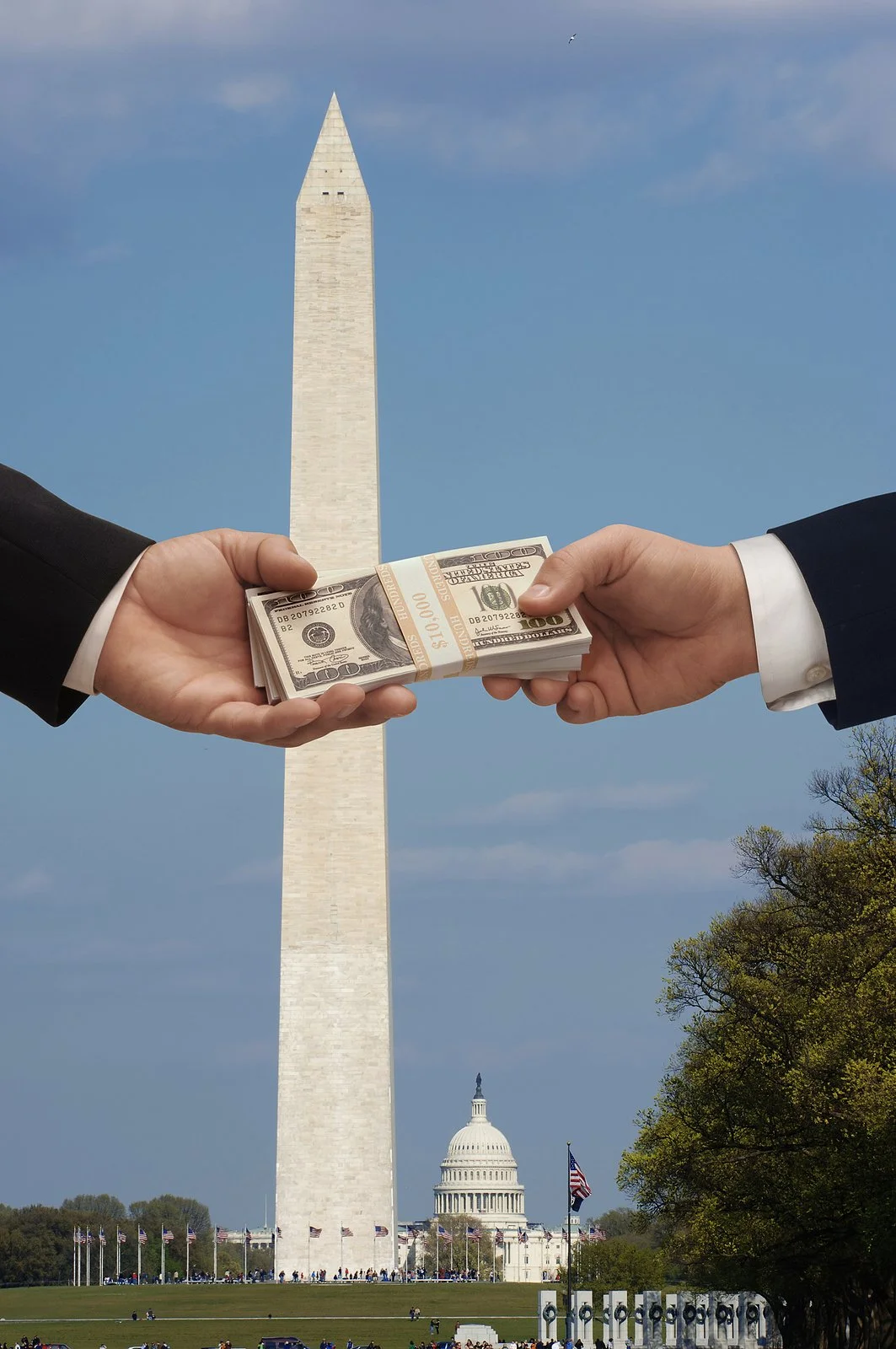
A model definition of Pay to Play.
Seem Familiar?